


- Long-Term Disability
- Are my Long-Term Disability Benefits Taxable in Ontario?
Learn when long-term disability (LTD) benefits are taxable, how disability settlements are treated by the Canada Revenue Agency (CRA), and what Ontario employees should know before accepting a disability settlement.
Quick Answer
Long-term disability benefits may be taxable depending on who paid the insurance premiums.
- If your employer paid all or part of the LTD premiums, the benefits you receive are generally taxable.
- If you paid 100% of the premiums using after-tax income, your LTD benefits are typically tax-free.
- If both you and your employer contributed to the premiums, only the portion attributable to your employer’s contributions is generally taxable.
Because disability insurance policies vary, it is important to review your policy and employment records carefully before assuming your benefits are tax-free.
How Long-Term Disability Benefits Work
Long-term disability insurance provides income replacement when a medical condition prevents you from working for an extended period of time.
Many Ontario employees receive LTD coverage through a group benefits plan offered by their employer. Others purchase individual disability insurance policies directly from an insurer.
The tax treatment of disability benefits depends primarily on how the insurance premiums were funded before the disability claim arose.

Have your long-term disability benefits been denied or terminated? We can help.
injured.ca
When Are Long-Term Disability Benefits Taxable?
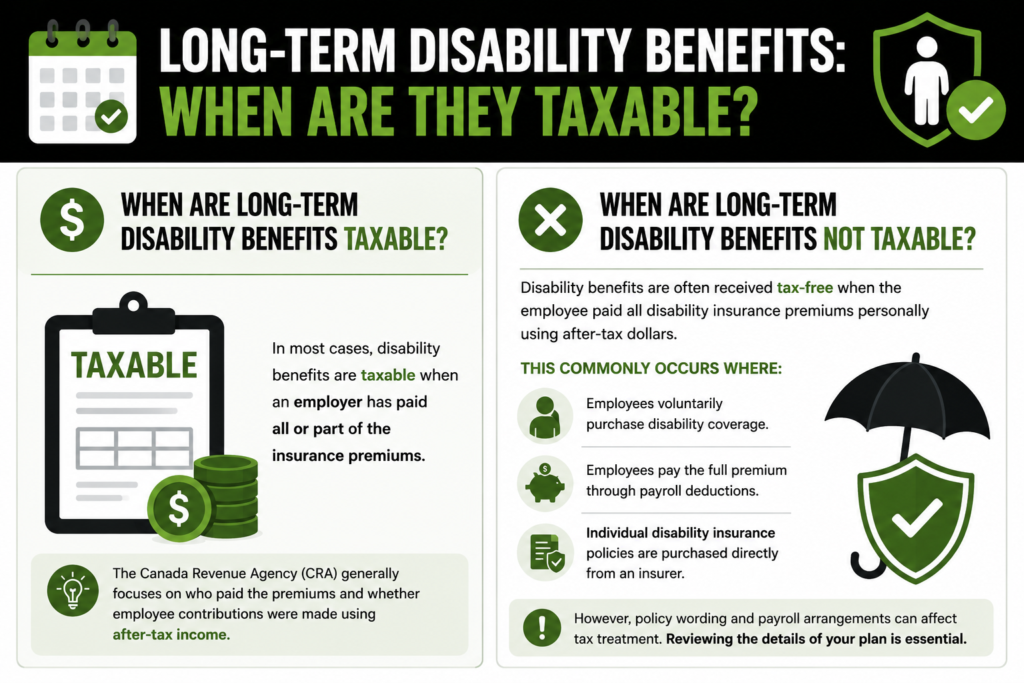
Your long-term disability benefits are taxable if your employer has paid all or any part of the premiums for your disability insurance plan. In these situations, the benefits you receive while on claim are treated as taxable income.
When Are Long-Term Disability Benefits Not Taxable?
Disability benefits are often received tax-free when the employee paid all disability insurance premiums personally using after-tax dollars.
This commonly occurs where:
- Employees voluntarily purchase disability coverage
- Employees pay the full premium through payroll deductions
- Individual disability insurance policies are purchased directly from an insurer
However, policy wording and payroll arrangements can affect tax treatment. Reviewing the details of your plan is essential.
What Happens When Premiums Are Shared?
Many employer-sponsored disability plans involve contributions from both the employer and employee.
Where premiums are shared:
- The portion funded by the employer is generally taxable
- The portion funded by the employee may be received tax-free
Calculating the taxable amount can become complex, particularly where premium arrangements changed over time.
How Can I Tell If My LTD Benefits Are Taxable?
Determining whether long-term disability (LTD) benefits are taxable often depends on how the insurance premiums were paid before your disability claim began.
In many cases, your disability lawyer, accountant, employer, or insurer can help determine whether your benefits are taxable. However, there are several factors you can review yourself.
Checklist: Are My LTD Benefits Taxable?
Ask yourself the following questions:
✅ Did your employer pay all of the disability insurance premiums?
✅ Were premiums deducted from your paycheque using after-tax income?
✅ Is your LTD coverage part of a workplace group benefits plan?
✅ Did both you and your employer contribute to the premiums?
✅ Have you received a T4A slip for your disability benefits?
✅ Did your insurer advise that benefits are taxable?
✅ Are CPP Disability benefits being deducted from your LTD payments?

Generally speaking:
- LTD benefits are often taxable when an employer paid some or all of the premiums
- LTD benefits are commonly tax-free when the employee paid all premiums personally using after-tax income
Because insurance policies and payroll arrangements can vary significantly, reviewing your policy documents and contribution history is important.
If you are uncertain whether your long-term disability benefits are taxable, speaking with an Ontario disability lawyer or tax professional can help clarify your situation before you accept a settlement or file your taxes.
Are Long-Term Disability Settlements Taxable?
A common question we hear from disability claimants across Ontario is whether a lump-sum disability settlement is taxable.
The answer depends on what the settlement represents.
Future Disability Benefits
When a settlement compensates a claimant for future disability benefits, the tax treatment generally follows the same principles that would have applied to the monthly benefits.
If future monthly benefits would have been taxable, the settlement amount may also be taxable.
Disability Arrears
Disability arrears represent benefits that should have been paid in previous months but were wrongfully withheld by the insurer.
In many situations, arrears payments receive the same tax treatment as the monthly benefits they replace.
Because settlements are often structured differently, obtaining legal and tax advice before accepting a settlement offer is advisable.
Hamilton, Ontario Disability Claims and Tax Considerations
Individuals pursuing long-term disability claims in Ontario frequently face questions regarding taxation during settlement negotiations.
Insurance companies may not explain the tax consequences of a proposed settlement. Understanding the potential tax impact can be an important factor when evaluating an offer.
At our firm, we regularly assist disability claimants throughout:
- Hamilton
- Burlington
- Oakville
- Mississauga
- Toronto
- Niagara Region
- Communities across Ontario
Understanding both the legal and financial implications of a settlement can help claimants make informed decisions.
What our Hamilton, Ontario Disability Lawyers Want You to Know
Many people assume that all disability benefits are tax-free. In reality, tax treatment often depends on factors that are not immediately obvious, including:
- Employer contribution history
- Payroll deduction records
- Changes to group benefit plans
- Settlement structure
- Policy wording
Before accepting a disability settlement, it is often worthwhile to review the potential tax consequences and ensure the proposed amount reflects the true value of the claim.
Do I Need to Report my Long-Term Disability Settlement on my Taxes?
Generally, long-term disability (LTD) settlements for past disability benefits are taxable if the underlying monthly LTD benefits were taxable.
When an insurer pays taxable LTD arrears in a lump sum settlement, it will usually deduct income tax at source and issue a T4A slip for the taxable portion of the payment.
If the lump sum relates to prior tax years, you may be eligible to submit CRA Form T1198 (Statement of Qualifying Retroactive Lump-Sum Payment). This allows the CRA to calculate the tax as though portions of the payment had been received in the earlier years, which can reduce the tax impact of receiving a large lump sum in one year.
Speak With an Ontario Long-Term Disability Lawyer
If your disability claim has been denied, terminated, or delayed, obtaining legal advice before accepting a settlement offer can help protect your rights.
Our Ontario disability lawyers help individuals understand their options, challenge unfair claim decisions, and pursue the compensation they may be entitled to receive.
📞 Call 905-333-8888 for a free consultation or contact us online to discuss your situation.
Get the Support You Deserve
The taxation of long-term disability benefits follows clear rules based on premium payment arrangements, but the broader tax picture for individuals with disabilities involves multiple credits, deductions, and planning considerations. When insurance companies deny benefits or create tax confusion, you shouldn’t face these challenges alone.
Understanding your rights under disability insurance policies and tax law can make the difference between financial security and ongoing hardship. If your long-term disability claim has been denied, terminated, or you’re facing complex tax issues related to your benefits, experienced legal guidance can help protect your interests.
Call us in Ontario at 905-333-8888 or alternatively, fill out a confidential contact form and we would be happy to explain your rights to you without cost or obligation.
Article FAQ
Are my long-term disability benefits taxable?
Long-term disability benefits are taxable if your employer paid the premiums. If you paid all the premiums with after-tax dollars, then your benefits are usually paid tax-free.
Will I receive a T4A for taxable LTD benefits?
Yes. If LTD benefits are taxable, the insurer normally issues a T4A showing the taxable disability benefits paid during the year.
Are LTD settlement arrears taxable?
LTD settlement arrears usually follow the same tax treatment as the monthly benefits. Taxable monthly benefits generally mean taxable arrears.
Is a lump-sum LTD settlement taxable?
A lump-sum LTD settlement may contain taxable and non-taxable parts. Arrears, future benefits, interest, and costs should be reviewed separately.
Is tax withheld from LTD payments?
Tax is commonly withheld from taxable LTD payments before the money is deposited. The net monthly amount may be lower than the gross benefit.
Does CPP Disability affect LTD taxes?
CPP Disability benefits are taxable and may reduce LTD payments under many policies. The tax treatment of each benefit should be considered separately.
Can legal fees affect LTD tax reporting?
Legal fees for recovering taxable disability benefits may have tax implications. Ask a tax professional before filing after an LTD settlement.
Are LTD benefits taxed differently in Ontario?
Ontario generally follows the same basic premium-payment rule. If LTD benefits are taxable federally, they are usually included in Ontario taxable income.