


- Personal Injury
- Brake Checking Car Accident – Know your Rights
Brake checking is a dangerous driving tactic in which a driver suddenly slams on their brakes to intimidate or punish the vehicle behind them, often causing serious rear-end collisions, catastrophic injuries, and complex liability disputes on Ontario roads.
Brake Checking can Cause Serious Car Accidents
Brake checking is one of the most dangerous forms of aggressive driving on Ontario roads. It occurs when a driver suddenly slams on their brakes without a legitimate safety reason — often to intimidate or retaliate against a driver who is following too closely.
Because these sudden stops leave the trailing driver with little time to react, brake checking frequently causes serious rear-end collisions, multi-vehicle crashes, and devastating injuries — including spinal cord damage, traumatic brain injuries, and chronic pain conditions that can permanently alter a victim’s life.
At Lalande Personal Injury Lawyers, our Hamilton car accident lawyers have represented victims of brake checking accidents throughout Ontario. We know how to investigate these cases, challenge unfair fault determinations, and pursue the full compensation our clients deserve for their injuries, lost income, and pain and suffering.
If you were injured in a brake checking accident, you have rights — and you should not have to fight the insurance companies alone. Read on to learn more about how brake checking accidents happen, who may be liable, and how our team can help.

Common Brake Checking Scenarios
Brake checking tends to occur in situations where emotions escalate between drivers or where one motorist attempts to control the behaviour of another. Some of the most common scenarios include:
A Driver Responding to a Tailgater
One of the most frequent situations occurs when a driver believes the vehicle behind them is following too closely. Instead of safely changing lanes or allowing the other driver to pass, the driver in front may suddenly brake in an attempt to force the trailing driver to slow down — a reaction that is both dangerous and legally indefensible.
Road Rage Incidents
Brake checking is frequently associated with road rage. A driver who feels disrespected or frustrated may deliberately brake in retaliation after being honked at, cut off, or followed too closely — with little regard for the harm their actions may cause.
Highway Lane Disputes
On highways, brake checking can occur when drivers clash over lane positioning or speed. A driver travelling in the left lane may brake suddenly after another vehicle approaches quickly from behind, turning a minor frustration into a potentially catastrophic collision.
Insurance Fraud Schemes
In more calculated cases, brake checking is used deliberately to trigger a rear-end collision. Because rear-end crashes often give rise to a presumption that the trailing driver is at fault, some individuals attempt to exploit this assumption to pursue a fraudulent insurance claim. Commercial vehicles, trucks, and fleet cars are frequent targets — they are harder to stop quickly, and their insurers are more likely to settle without prolonged dispute.
The responsible way to deal with tailgaters or aggressive drivers is to avoid provocative maneuvers like brake checking and instead use safe driving practices to handle the situation.
Regardless of the reason, brake checking dramatically increases the risk of a rear-end collision and the serious injuries that follow. If you were involved in a rear-end crash and suspect the driver ahead of you deliberately hit their brakes, you may have a valid legal claim — and you should speak with an experienced Hamilton car accident lawyer as soon as possible.
One of the most persistent misconceptions in Ontario accident law is that the driver who strikes another vehicle from behind is always at fault. While rear-end collisions do give rise to a strong presumption of fault against the trailing driver — rooted in both the Fault Determination Rules, R.R.O. 1990, Reg. 668, and the Ontario Court of Appeal’s decision in Iannarella v. Corbett — that presumption is not absolute, and in a brake checking case, it can be challenged.
Is Brake Checking Illegal in Ontario?
Brake checking, also known as “break check,” is not simply a traffic dispute — it can be a criminal act with serious legal consequences. While Ontario’s Highway Traffic Act does not use the phrase “brake checking” explicitly, the behaviour falls squarely within several offences when a driver intentionally creates a dangerous situation on the road. The absence of that specific term in the legislation does not protect a driver who engages in it — courts look at conduct, not labels. In most states and provinces, brake checking is considered illegal and subject to severe penalties, including charges such as reckless driving, vehicular assault, or even homicide if it causes an accident or injury. It is important for all drivers to maintain safe following distances and adhere to the speed limit to avoid dangerous situations and legal consequences related to brake checking.
Careless Driving
Under section 130 of the Highway Traffic Act, a driver who operates a vehicle without due care and attention, or without reasonable consideration for others on the road, is guilty of careless driving. A deliberate, unnecessary brake application that endangers the driver behind is precisely the kind of conduct section 130 is designed to capture. Fines for careless driving related to brake checking can escalate to $50,000 if there are injuries or fatalities involved. If a crash occurs, the lead or leading driver may be charged with careless driving, which carries fines up to $2,000 or $50,000 if injury occurs. A conviction can also result in six demerit points, a licence suspension of up to two years, and in serious cases, imprisonment.
Stunt Driving
Brake checking is illegal under Section 172 of the Ontario Highway Traffic Act, which bans stunt driving. Stunt driving offences apply to conduct that is aggressive, dangerous, or performed in a manner that deliberately puts other road users at risk. Brake checking — particularly at highway speeds or in circumstances designed to provoke a collision — can meet this threshold. Convictions for brake checking can result in fines ranging from $2,000 to $10,000, 6 demerit points, and potential jail time. Brake checking can be classified as stunt driving in Ontario, leading to immediate penalties, including a 30-day driver’s license suspension and 14-day vehicle impoundment. The consequences are severe: immediate roadside licence suspension, on-the-spot vehicle impoundment, substantial fines, and the possibility of a lengthy driving prohibition upon conviction.
Criminal Driving Offences
Where brake checking causes serious injury or death, the matter may extend beyond provincial traffic law into the Criminal Code of Canada. Severe cases of brake checking can lead to criminal charges such as dangerous driving or criminal negligence, punishable by up to 10 years in prison. Charges of dangerous operation of a conveyance or criminal negligence causing bodily harm or death are possible where the conduct is sufficiently reckless or deliberate.
Beyond the criminal and regulatory consequences, a driver who brake checks another vehicle and causes a collision may also face significant civil liability. In a personal injury claim, the brake-checking driver’s intentional or negligent conduct can form the foundation of a lawsuit — allowing the injured victim to seek compensation for pain and suffering, lost income, medical expenses, and other losses that flow from the crash. A conviction for brake checking will also lead to a significant, long-term increase in insurance premiums, with many insurers dropping coverage for high-risk drivers.
Under Ontario law, once a rear-end collision is established, the burden of proof shifts to the striking driver to prove they were not at fault — meaning the rear driver must show they exercised reasonable care, or that the collision was caused by a sudden and unforeseeable event beyond their control. In a brake checking case, that is precisely the argument: the lead driver created a sudden, deliberate hazard that no reasonable following driver could have anticipated or avoided.
It is worth noting, however, that the Fault Determination Rules hold that even if the car in front stopped suddenly, the rear driver is almost always assigned 100% fault, because drivers are expected to maintain a safe following distance regardless of what the person ahead does. Leaving enough space between vehicles is crucial to ensure safe stopping distances and prevent accidents caused by sudden stops or brake checking. This is why brake checking cases can be legally complex — and why having an experienced personal injury lawyer investigate the full circumstances is critical.
The Role of Evidence
Establishing that a brake check occurred requires evidence — and the right evidence can make all the difference. Dash-cam footage is among the most powerful tools available, as it can capture the lead driver’s behaviour in the moments before impact. Witness statements, accident reconstruction reports, and vehicle event data recorder (EDR) information can also help establish whether the stop was a genuine emergency response or a deliberate, aggressive act. A personal injury lawyer will move quickly to preserve this evidence before it is lost or overwritten.
Contributory Negligence
Ontario’s contributory negligence principle means that fault can be shared — and even if you were partially responsible for what happened, you can still pursue a claim against the other driver, with your compensation reduced proportionally to your degree of fault. A trailing driver who was following too closely may bear some responsibility — but that does not absolve a driver who deliberately brake checked. Courts will apportion liability based on each party’s conduct.
When the Brake-checking Driver Bears Full Liability
Where evidence clearly establishes that the lead driver braked intentionally and without cause — particularly where dash-cam footage or credible witness accounts corroborate aggressive conduct — courts may assign full liability to the brake-checking driver, especially where the trailing driver was maintaining a reasonable following distance and had no realistic opportunity to avoid the collision.
In Ontario’s “no-fault” system, victims of a brake-check accident can sue the lead driver for non-economic damages such as pain and suffering. Additionally, an at-fault determination for brake checking can lead to insurance premium increases of 50% to 100%.
Every brake checking case turns on its specific facts. If you were rear-ended and believe the driver ahead of you deliberately caused the crash, do not accept a presumption of fault — contact an experienced Hamilton car accident lawyer who can investigate the full picture and fight for the compensation you deserve. Victims of brake-checking accidents should avoid admitting fault at the scene, as this can be used against them in liability claims.
How Sudden Stops Lead to Devastating Collisions
When a driver abruptly slows or stops without warning, the motorists behind them are left with seconds — sometimes fractions of a second — to react. Distracted driving is a common cause of rear-end collisions, as it prevents drivers from noticing and reacting to sudden changes in traffic flow. At highway speeds, that window is often far too narrow to prevent a serious collision. Adverse weather conditions can drastically reduce tire traction and braking efficiency, making it harder for drivers to stop in time and avoid collisions. Brake checking does not merely create inconvenience; it creates conditions in which catastrophic crashes become almost unavoidable.
Maintaining tires and brakes in good condition is crucial for vehicle safety, as worn tires or poor braking efficiency can significantly increase stopping distances. Insurers in Ontario consider the condition of key safety features, including brakes, when determining premiums. Regular brake inspections are recommended at least once a year or every 10,000 to 12,000 kilometers, especially in Ontario’s harsh climate. Functioning lights, especially brake lights, are also essential for preventing accidents and clarifying a driver’s intentions on the road.
The consequences for victims can be life-altering. Many face months or years of medical treatment, rehabilitation, and financial hardship. In the most serious cases, sudden-stop collisions result in permanent disability, chronic pain, and losses that extend far beyond the moment of impact. The types of collisions that brake checking can trigger vary — but all of them carry the potential for devastating injury.
Rollover and Off-Road Crash Injuries
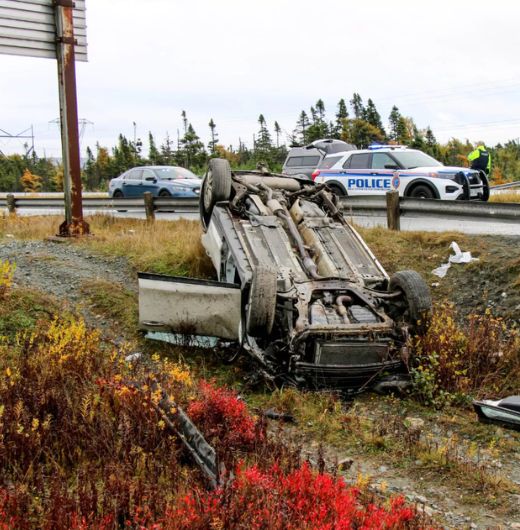
In particularly severe brake-checking accidents, the force of the impact may cause the trailing vehicle to lose control. The vehicle may spin, leave the roadway, strike roadside barriers, or even roll over.
Rollover crashes are among the most dangerous types of motor vehicle accidents. When a vehicle overturns, occupants may be subjected to multiple impacts and violent movements inside the cabin.
These crashes frequently result in catastrophic injuries such as:
- Multiple fractures
- Severe spinal trauma
- Traumatic brain injuries
- Internal bleeding
- Fatal injuries
Highway Pileups
A highway pileup occurs when a single triggering event — such as a sudden brake check — causes a chain reaction of collisions involving multiple vehicles in rapid succession. At highway speeds, drivers have almost no time to react, and the forces generated by successive high-speed impacts can be catastrophic. Occupants may be struck from multiple directions, dramatically increasing the severity of their injuries. Traumatic brain injuries, spinal cord damage, multiple fractures, and internal injuries are common outcomes — and in the most tragic cases, highway pileups are fatal. When brake checking sets a pileup in motion, the driver who initiated that deliberate stop may bear legal responsibility for every collision and every injury that follows.
Rear-End Collisions
Rear-end collisions are among the most common types of motor vehicle accidents in Ontario, and intentional brake checking is one of their most dangerous causes. When a driver suddenly applies their brakes without a legitimate safety reason, the vehicle behind them frequently has no meaningful opportunity to slow down or avoid impact.
The physical forces involved in these crashes can be severe. Even at moderate speeds, the sudden transfer of energy through a vehicle’s occupants can cause significant trauma. Victims frequently suffer whiplash and soft tissue injuries to the neck and shoulders, herniated or bulging discs, spinal fractures, traumatic brain injuries, and chronic pain conditions that persist long after the visible injuries have healed. In high-speed rear-end collisions — the kind that brake checking on a highway can trigger — the injuries can be catastrophic and, in some cases, fatal.
For injured victims, the physical toll is only part of the story. The financial consequences — mounting medical bills, lost income, long-term rehabilitation costs, and the inability to return to work — can be equally devastating. If you were rear-ended as a result of another driver’s sudden, deliberate stop, a Hamilton car accident lawyer can help investigate the circumstances, preserve critical evidence, and pursue full compensation for everything you have lost.
Multi-Vehicle Accidents and Chain-Reaction Collisions
Brake checking at speed does not always produce a single impact. On busy highways or in heavy traffic, a single abrupt stop can trigger a chain reaction as multiple vehicles struggle simultaneously to slow down or change course. The result — what is commonly referred to as a pile-up — can involve several vehicles, multiply the forces at play, and dramatically increase the severity of injuries sustained by everyone involved.
In these collisions, victims may be struck from multiple directions. Drivers attempting to avoid the initial impact may swerve into adjacent lanes, lose control, or collide with barriers — extending the zone of danger far beyond the original incident. The combined forces generated in multi-vehicle crashes can cause injuries of a severity that a standard rear-end impact would not.
The danger extends beyond vehicle occupants. In urban environments, drivers attempting emergency avoidance manoeuvres may mount curbs or lose control near pedestrian areas. Pedestrians and cyclists — who have no physical protection from the force of a vehicle — are acutely vulnerable in these situations. When a pedestrian is struck in a chain-reaction collision, the injuries are frequently catastrophic and may tragically result in wrongful death.
Determining liability in multi-vehicle accidents is rarely straightforward. Multiple drivers, multiple insurance policies, and overlapping contributing factors must all be examined to trace the chain of causation back to its source. Identifying the driver whose brake checking set the collision in motion — and holding them accountable — requires thorough investigation, skilled accident reconstruction, and experienced legal advocacy. If you or someone you love was injured in a multi-vehicle collision, an experienced Hamilton personal injury lawyer can help you protect your rights and navigate what can be an extraordinarily complex legal process.
Prevention and Safety: How to Avoid Brake Checking Accidents
Brake checking accidents are not only dangerous—they are also preventable. Understanding how these incidents occur and taking proactive steps can dramatically reduce your risk of being involved in a rear-end collision or suffering serious injuries. Whether you are driving on busy Ontario highways or navigating city streets, adopting safe driving habits is crucial for your safety and the safety of others on the road.
Maintain a Safe Following Distance
One of the most effective ways to avoid brake checking accidents is to always maintain a safe following distance from the vehicle ahead. This gives you enough time and space to react if the car in front stops suddenly or if unexpected hazards appear. Experts recommend following the “three-second rule”: choose a fixed point on the road, and ensure at least three seconds pass between when the car in front passes that point and when you do. In poor weather or heavy traffic, increase this distance even further. Keeping a safe following distance is crucial in minimizing the risk of rear-end collisions and allows you to stop safely if the leading vehicle brakes hard or unexpectedly.
Recognize Warning Signs of Aggressive Driving
Being able to spot the warning signs of aggressive or reckless driving can help you anticipate and avoid dangerous situations. Watch for vehicles that are weaving between lanes, making sudden stops, or repeatedly tapping their brakes without a legitimate reason. If you notice a driver brake checking or acting unpredictably, increase your distance and avoid engaging with them. Staying alert to these warning signs can help you steer clear of potential accidents before they happen.
Practice Defensive Driving Techniques
Defensive driving is essential for reducing your risk on the road. Always stay focused on your surroundings, anticipate the actions of other drivers, and be prepared to react calmly to sudden changes in traffic. Avoid tailgating, even if you feel frustrated by a slow-moving car in front. If another driver is following you too closely, resist the urge to brake check—instead, safely change lanes or allow them to pass when possible. Keeping your emotions in check and prioritizing safety over retaliation can prevent accidents and keep everyone on the road safer.
Stay Calm and Avoid Road Rage
Road rage and aggressive driving are common triggers for brake checking incidents. If you encounter an aggressive driver, do not escalate the situation. Avoid making eye contact, gesturing, or responding to provocation. Focus on maintaining control of your vehicle and keeping a safe distance from other cars. Your primary goal should always be to arrive at your destination safely, not to “teach a lesson” to another driver.
By following these prevention strategies—maintaining a safe following distance, recognizing warning signs, and practicing defensive driving—you can significantly reduce your risk of being involved in a brake checking accident. These simple but crucial habits not only protect you from injuries and costly insurance claims but also contribute to safer roads for everyone in Ontario.
Common Injuries From Brake Checking Accidents
plz provide conteSudden stop accidents—particularly those caused by brake checking—can produce extremely violent forces inside a vehicle. When a driver brakes abruptly without warning, the vehicle behind them may collide at full speed, transferring enormous impact forces through the occupants’ bodies.
While some collisions result in relatively minor injuries, many brake-checking accidents lead to far more serious trauma. High-speed rear-end collisions can cause severe spinal injuries, fractures, and traumatic brain injuries. In some cases, the force of the impact may push vehicles off the roadway or cause them to spin, roll over, or collide with additional vehicles.
These types of crashes can permanently alter a victim’s life, leaving them with long-term disabilities, chronic pain, and significant financial losses.
Cervical Spine and Neck Fractures
One of the most serious injuries associated with sudden stop collisions is trauma to the cervical spine—the delicate bones and structures that support the neck and protect the spinal cord.
During a high-impact rear-end collision, the head can be violently forced forward and backward in a fraction of a second. This motion places enormous strain on the vertebrae, ligaments, and discs in the neck. In more severe crashes, the force may cause fractures of the cervical vertebrae or damage to the surrounding spinal structures.
Cervical fractures are medical emergencies. These injuries can compromise the stability of the spine and may place pressure on the spinal cord or nearby nerves. Victims may experience severe pain, loss of mobility, numbness, or neurological symptoms affecting the arms and hands.
In the most serious cases, damage to the cervical spine can lead to partial or complete paralysis.
Thoracic and Lumbar Spine Fractures
The middle and lower portions of the spine—the thoracic and lumbar regions—are also highly vulnerable in violent rear-end collisions.
When a vehicle is struck with significant force, the body may be thrust forward while the seatbelt restrains the torso. This sudden compression can place intense pressure on the vertebrae, sometimes causing them to fracture or collapse.
These injuries may include:
- Compression fractures of the vertebrae
- Herniated or ruptured spinal discs
- Fractures of the vertebral body
- Damage to surrounding ligaments and spinal structures
Victims often experience severe back pain, reduced mobility, and difficulty performing everyday tasks. In some cases, spinal fractures may require surgical stabilization, spinal fusion, or long-term rehabilitation.
Spinal Cord Injuries and Paralysis
When trauma to the spine affects the spinal cord itself, the consequences can be catastrophic.
The spinal cord acts as the body’s central communication pathway between the brain and the rest of the body. Damage to this structure can disrupt the transmission of nerve signals, resulting in permanent loss of movement or sensation.
Depending on the location of the injury, victims may suffer:
- Quadriplegia which affects both arms and both legs
- Paraplegia which affects the lower body and legs
- Chronic neuropathic pain
- Loss of bladder or bowel control
- Severe muscle weakness or spasticity
Spinal cord injuries typically require emergency medical intervention, prolonged hospitalization, and extensive rehabilitation. Many individuals require lifelong medical care, mobility assistance, and modifications to their homes and vehicles.
Traumatic Brain Injuries
Sudden stop accidents can also cause severe head trauma. When a collision occurs, occupants may strike their heads against the steering wheel, dashboard, window, or headrest.
Even when the head does not directly strike an object, the violent acceleration and deceleration of the brain inside the skull can cause significant neurological injury.
Traumatic brain injuries may include:
- Concussions
- Brain contusions
- Diffuse axonal injury
- Permanent cognitive impairment
Victims may experience memory loss, difficulty concentrating, personality changes, headaches, dizziness, and long-term neurological complications.
Understanding Your Rights after a Brake Check Crash
After a brake check accident, navigating the legal process can be overwhelming. A car accident lawyer is essential in managing the complexities of your case, including gathering key evidence, reconstruction reports, accident reports, witness statements, preserving black boxes, camera footage, dashcam footage, starting a legal action, and building a case to pursue fair compensation for your injuries and losses. Their expertise ensures every aspect is handled promptly and thoroughly, protecting your rights throughout the process. For example, we can assist with:
Assisting with Hospital Discharge
After a serious accident, hospital discharge can be an overwhelming experience for both the injured party and their families. At Lalande Personal Injury Lawyers, we have extensive experience helping clients transition smoothly from the hospital to home or a rehabilitation facility. Our team can assist with coordinating post-discharge care, including arranging attendant care benefits to cover expenses for aides or attendants who can help with daily functions such as dressing, grooming, and mobility. We also help clients apply for necessary benefits under Ontario’s no-fault accident benefits regime, including income replacement, medical and rehabilitation benefits, and access to long-term care if required.
Getting OT’s Involved
We collaborate with our skilled occupational therapy team to support our clients’ transition from hospital to home. They assess the patient’s needs, recommend adaptive equipment, and create tailored rehabilitation plans to improve daily function and independence. This helps clients adapt to life post-accident while ensuring a smoother recovery process.Our OT’s will assist throughout the entire course of your case.
Starting the No-Fault Process
Starting the no-fault benefit process after a car accident can be complex, but our car accident lawyer can guide you every step of the way. We assist in promptly notifying your insurance company and help complete the necessary forms, such as the Application for Accident Benefits (OCF-1), ensuring accuracy and thoroughness. Our team also gathers supporting documents like medical records and accident reports, addressing potential issues early on to secure the benefits you are entitled to, including income replacement and medical expense coverage.
Starting a Legal Case
Being injured through no fault of your own is overwhelming enough — navigating the insurance system on top of it should not be your burden to carry alone. When you retain Lalande Personal Injury Lawyers, our team gets to work immediately: investigating the accident, identifying all liable parties, preserving critical evidence, and building the strongest possible case on your behalf.
We pursue every available head of damages — including compensation for pain and suffering, medical expenses, lost income, rehabilitation costs, future care needs, and the broader impact the injury has had on your day-to-day life and relationships. Our goal is not simply to settle your case — it is to secure a result that fully reflects what you have lost and protects your long-term financial security as you move forward.

Lalande helped my family through a terrible car accident situation. My wife was hit on the highway at high speed and suffered very, very serious injuries and will never work again. The case took a long time, but in the end we were so happy we hired Matt. Not ony is he a good lawyer, but also a super nice down to earth person. Tom.
Seek Legal Help from Lalande Personal Injury Lawyers
A brake checking accident can turn a person’s life upside down in an instant. In the aftermath, victims are often forced to deal not only with painful injuries, but also with complex insurance claims and difficult legal questions.
At Lalande Personal Injury Lawyers, our Hamilton car accident lawyers understand how overwhelming this process can feel. Our team will investigate the circumstances of the crash, preserve critical evidence, deal directly with the insurance companies, and pursue the full compensation available under Ontario law—so that you can focus on your recovery.
If you or a loved one was injured in a brake checking accident anywhere in Ontario, contact Lalande Personal Injury Lawyers today at 905-333-8888 for a free, no-obligation consultation. You may also reach us confidentially through our online contact form, and a member of our intake team will respond promptly to assist you and your family.
Article FAQ
Who is at fault if you are brake checked?
Fault depends on the circumstances of the collision. While rear drivers are often presumed at fault, a driver who intentionally brake checks may share liability if their conduct created a dangerous situation.
What is the number one cause of accidents in Ontario?
Distracted driving and driver inattention are widely considered the leading causes of motor vehicle accidents in Ontario. Activities such as texting, adjusting devices, or looking away from the road significantly increase crash risk.
Is it illegal to brake check someone in Ontario?
Brake checking is not specifically named in legislation, but it can constitute careless or dangerous driving under Ontario’s Highway Traffic Act. A driver who intentionally brakes to intimidate another vehicle may face fines, demerit points, or liability for a collision.
What do you do after a minor car accident in Ontario?
Drivers should move vehicles to a safe location if possible, exchange information, and document the scene. If the damage exceeds the reporting threshold or injuries are suspected, the collision must be reported to police or a collision reporting centre.
What are common triggers for brake checking?
Brake checking is often triggered by road rage, frustration with tailgating, or aggressive driving disputes. Some drivers use it to intimidate or “teach a lesson” to the vehicle behind them.
What is the point of brake checking?
Brake checking is typically used as an aggressive driving tactic meant to intimidate the driver behind. It is often an emotional reaction to perceived tailgating or frustration on the road.
Is brake checking illegal in Canada?
Brake checking is not always listed as a specific offence, but it may qualify as careless or dangerous driving under Canadian traffic laws. Courts can impose penalties if the conduct creates an unsafe situation on the road.
Is tailgating illegal in Canada?
In Ontario, tailgating is addressed under s.158 of the Highway Traffic Act, which requires drivers to maintain a reasonable and prudent following distance considering speed and traffic conditions. A violation can result in a fine and demerit points.
Why is brake checking dangerous?
Brake checking can cause sudden rear-end collisions because the following driver may not have enough time or distance to react. It also increases the risk of multi-vehicle crashes on busy roads and highways.
What types of accidents are commonly caused by brake checking?
Brake checking often leads to rear-end collisions, chain-reaction crashes, and highway pileups. These accidents can cause serious injuries, particularly when vehicles are travelling at high speeds.
Can dashcams help prove a brake checking accident?
Yes. Dashcam footage can capture the lead vehicle’s sudden braking and the sequence of events leading to the collision. This type of evidence can be important when determining liability.